
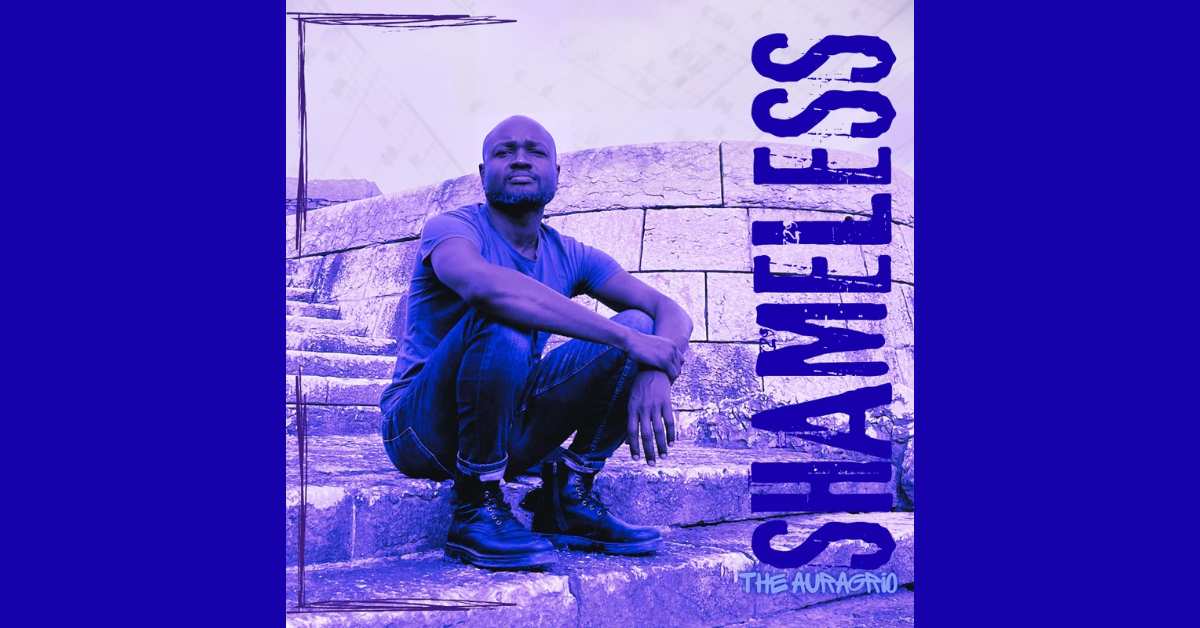
Shameless is a music curation created for the RESET. It’s a set of music based on internal conversations I’ve had with myself over the years, conversations I’ve had with other queer people that I’ve mentored, and friends who went through similar situations. It captures the period where I deconstructed my relationship with religion to embrace the complete acceptance of myself and discover that my spirituality is just a matter of loving, understanding, and being curious about myself and all that is.
I intended to focus strictly on gospel music, but my creative mind wanted to go deeper. My relationship with gospel music is complicated. Gospel music shaped my musical abilities, yet the lyrics caused some internal struggle. I’m no longer attached to the religion gospel is connected to, or to any other religion, so why do I find gospel music comforting in times of reflection, heartache, or existential thought? Today, even after R&B, pop, rock, and other genres became more formulaic and commercial around 2000, you find traces of gospel music: chords, tone, bassline, and percussion give secular music its “soul.” Before I could do an entire set of solely gospel music, I needed to address my trepidation.
In selecting the music for Shameless, I thought of my path beyond any religious or spiritual practice. Sometimes life is mysterious, going beyond all logic – so I understand the need for anyone to make sense of it. I immersed myself in the study of religions and spiritual practices in an attempt to understand the beliefs of others. I wanted to know WHY religious beliefs are so strong. What I never realized early on was how religion kept me in a state of shame. Shame is the weapon that patriarchy employs to keep people stuck and dependent on systems. Shame destroys us little by little, overloading our nervous systems. Any system that causes us to feel shame for our inherent selves should be questioned.
Shameless is a celebration of letting go of the shame that deters our liberation.
It was important for me to be liberated musically, expanding the meaning of gospel and breaking the boundaries of genre to create a story instead of a playlist.
Each song I used in my set has a meaning:
Maybe God’s Tryin’ to Tell You Somethin’ from The Color Purple Soundtrack – Quincy Jones
This has always been a favorite song of mine, and when I rewatch “The Color Purple,” this scene always drives me to tears. In the film, Shug Avery and other patrons of the local juke joint are relaxing on a Sunday Afternoon, and Shug hears the sound of a choir at a church in the distance. This was a church pastored by Shug Avery’s father, and the familiarity and passion of the song lured Shug to the church house, while the patrons of the juke joint followed. At the height of the song, you see Shug Avery open the doors of the church, and this song just wraps its arms around you. The scene ends when Shug embraces her father and says, “See, Daddy, sinners have souls too.”
It reminds me of the relationship I have with my own father, who is also a minister. This scene reminds me of some of the kids that called on the crisis line, trying to make sense of why their family kicked them out or abused them because their religion doesn’t make room for queer people.
Music can be a great equalizer. I’ve had countless conversations with queer people who were raised in the church, many of whom still listen to gospel music for inspiration, even though they’ve cut ties with the religion. Gospel music evolved from spirituals in North America-the songs of black people in captivity, clinging to hope for better days and life beyond their current experiences. Gospel music wasn’t meant solely for Christians…it’s meant to provide hope for something more…something beyond. Gospel music is transcendent and musical joy.
The title of this song makes me take a step back to reflect on god trying to tell us something. What does this voice sound like? How do you know if it is “god”? When I was young, elders said that god is this “still small voice,” and that was never enough for me, was it?
As I age, I embrace the “weird” in life. I don’t sit around for hours trying to figure out how something magical happened. I just say, “You know what? Fuck yeah!” and move forward with a sense of gratitude. I want to live, not in the past or in the future, but now. I’m guided by the wisdom of my experiences, along with logic and science, while leaving space for life’s magic to happen. The voice I hear now is that of my heightened awareness of this moment, always guiding me to do what is best for myself and those around me. This voice steers us towards liberation and truth. That is where love resides.
Falaise – Floating Points
Falaise in French means “cliff.” This song reminds me of the early days of removing myself from religion and the freedom, loneliness, discomfort, and excitement I felt. You can feel the escalation of tension within the music, but also a sense of wonder at the unknown.
For people deconstructing their religious beliefs and stepping forward with agnosticism, mysticism, or complete atheism, there may be more sense of responsibility and accountability that shows up when you aren’t cosplaying a decent human being to get into heaven or avoiding hell. You become a decent person for the sake of being a decent person. You’re a kind person, not because that is what Jesus would do, but you are kind JUST TO BE kind.
Krishna Krishna – Alice Coltrane
I was led to Alice Coltrane and began to dig into her life. Born in Detroit in 1937, Alice was best known for her marriage to John Coltrane, but she was a musician in her own right. She grew up playing in church and later performed with her own jazz trio and other jazz musicians. Within all of her music and her proficiency in piano/keyboard, organ, and harp, you can find traces of her gospel roots.
Krishna Krishna reminds me of the time spent studying Buddhism and meditation. I remember walking into the Buddhist temple where I studied and being in awe of the energy in the temple. It invited me to reflect and to be present. I remember being surrounded by mahogany walls with detailed Sanskrit carvings and cabinets displaying mainly gold figures of the Buddha. It reminds me of the ceremonies where I meditated for hours. Although it was different from the church I grew up in, the sentiment was the same. This feeling is also captured when I am amongst nature. Beauty in general elevates us.
How nice it would have been to listen to Alice Coltrane sing this mantra during a service. The organ makes the song sound good and churchy in my opinion, making the song otherworldly in a way. The imperfection in Alice’s voice makes the song incredibly honest and pure.
Manzanita – Bobby Hutcherson
I searched for Bobby Hutcherson’s meaning of his piece, Manzanita, but could not find much on it. However, this song was meant to be an embellishment of Alice Coltrane’s Krishna Krishna, adding a layer of depth. I really love how the marimba draws you into contemplation. This is often the kind of music that eases you into being here and now. It was important for me to introduce this in Shameless.
I Shall Wear a Crown – Bruce Parham
This song holds so much meaning in my life. This song is sung at funerals to celebrate one’s transition. Derivatives of “How I Made It Over” are echoed in many spirituals and gospel songs as hope of overcoming this hard life. It’s hope that there’s more than what we are experiencing right now. I listen to this song on occasion to remind myself of life now, looking for alternatives to stress happening in the moment.
The Beginning of the End – Headache
I just came across this song and artist not too long ago, and it reminded me of the thoughts that come to mind while enjoying a spliff by myself or with friends. Some of these weird thoughts have meaning, and days later, something triggers you, and you reflect on these conversations and their broader meanings.
Bridge Over Troubled Water – Yebba, Jacob Collier, John Legend, Tori Kelly
’m reminded of my friends and loved ones around me who truly care when listening to this song. It reminds me of Rayge and me. It reminds me of when I was really down, and out of the blue, a friend called at just the right time.
This song reminds me of how important deep connections are, no matter the relationship. As we make our way through this loneliness and mental health epidemic we experience in silence now, it’s an important reminder to cherish the loved ones you have in life. Many of us haven’t recovered completely from the solitude that the pandemic gave us. Solitude is a welcome for most, but we never expected the length of time we endured being distant from people.
Interlude II – Laraaji
When I’m really into a song, it feels like it washes over you, your skin absorbing all of the notes, echoes, and resonance. It’s the kind of music to serenade you at the beach or in nature, allowing it to carry you into another dimension.
Don’t Count Yourself Out (feat. Dawn Richard) – Tank and the Bangas, Dawn Richard
There was an elder who told me that “Jesus Music” was all there is. Even at a young age, I felt like that was an odd thing to say. Music is meant to inspire, and this one is no different. I came across “Don’t Count Yourself Out” by “accident.” I wasn’t looking for it, but it ended up in the set. It’s one of those songs that makes you bounce your shoulders, but the lyrics begin to inspire you.
Poly – Daphni
Poly reminds me of how fast life moves and why it’s important to appreciate RIGHT NOW. Much of the shame that I inherited from religion took me away from living my life freely. Not only that, but not living, not feeling like you can be yourself, takes time away from creating life, art, and the love you share with yourself and loved ones.
Optimistic – Sounds of Blackness
Optimistic is one of those songs that brings you joy. Even without the lyrics, the song just shares its happiness with you. This song was released in 1991, and you began to see major shifts in gospel music. Gospel began to sound more like R&B. This song was played often on mainstream radio stations in the US. Songs like these elevated gospel to more than a genre, but a feeling.
Gospel In My Soul – Billy Preston
If you ever have the opportunity to witness an organ solo live, I would highly recommend it. Although you can find plenty on YouTube. I remember going to church with my grandmother and being mesmerized by all of the multitasking organ players manage…the hand/foot coordination alone deserves so much credit.
Billy Preston worked with so many: the Beatles, Stevie Wonder, Little Richard, and Sam Cooke, and his work spans many genres, including rock, pop, R&B, and Jazz. His roots, however, were in gospel. It wasn’t until later in life until the day of his death. It was only after his death that he struggled with his faith and queerness.
Combing through Billy’s life mirrors that of other gospel artists who had to hide who they loved in order to continue the work they loved.
That’s How the Good Lord Works – Sunday Service Choir
This medley brings back so many memories of being in youth choir, and how much I learned about music. It was experiential learning at its best-I learned how to play piano by ear and developed a discerning musical ear. Little did I know that so much of what I learned early on prepared me for my study at University.
I remember when Kanye West debuted the Sunday Service Choir in 2019. It came during a time when the United States was really longing for change, struggling to find the best way to do this. When it comes to shame, the United States has plenty to be ashamed of, and it’s something that it has to face. With that said, it took a controversial Hip Hop artist to bring gospel to the forefront of popular culture. This album gave me some joy listening to remixed versions of older gospel songs.
How He Works (feat. Nico Vega) (N-You-Up Remix)/Put Cha Back In It – DJ Sliink/Part 4 Maybe God’s Tryin’ to Tell You Somethin’
This last medley was a reminder that the feeling-the essence of house and techno music came from gospel music. Many of the originators went to church; many are ministers now. I don’t want to rant for too long, but house or techno events that do not feature a single person of color or queer people will not cut it. The soul, the vibe, the joy that originated in those original warehouse parties weren’t just to be consumed as a commercial product. People, especially queer people, went to hear house and techno music in the 1990s because there was a feeling that reminded them of church, community, and belonging. Black queer people especially needed an outlet, as so many were disowned
When I hear gospel music now, I feel connected to my roots. I feel a connection to my ancestors just trying to survive in an unjust world. I hear elements of gospel music in Gregorian and Buddhist chants. I hear gospel music in rock, house, and techno music. After many years of struggling past much of the shame that religion etched into my psyche, I no longer feel shame. I feel the joy.
I dedicate this set to all of the kids (probably adults now) that called the crisis line 10 years ago. I hope they were able to find a way past the shame they felt for being disowned, for being told that they are less than, that they are sinners, or otherwise. Moving past shame is moving past the systems that attempt to keep us bound by fear. The facade of patriarchy is only demolished when we denounce it…and when we structure our life to be less dependent on the systems that rely on patriarchal practices.
I’m living my life WITHOUT shame.
Listen to SHAMELESS on Mixcloud:

Leave a Reply